Riverdance Farm · Hout Bay · Cape Town
Guiding you on a venture between you and yourself, on a farm in the Hout Bay mountains, where nothing whatsoever is required of you. Least of all by the horses.
WhatsApp Germaine 1:1 sessions by arrangement · See Sound Healing for hosting schedulescalmness and composure, especially in a difficult situation.
Equinimity is that word with the horses put back into it. A small joke, or the entire argument, depending on how your hour goes.
And what passes between a person and a horse out here has earned its own name. We call it Equinection. It is the part nobody can quite explain afterwards, ourselves included.
What this is
They picture a lesson. A helmet, an instructor, a circle of sand, some standard they are about to fall short of.
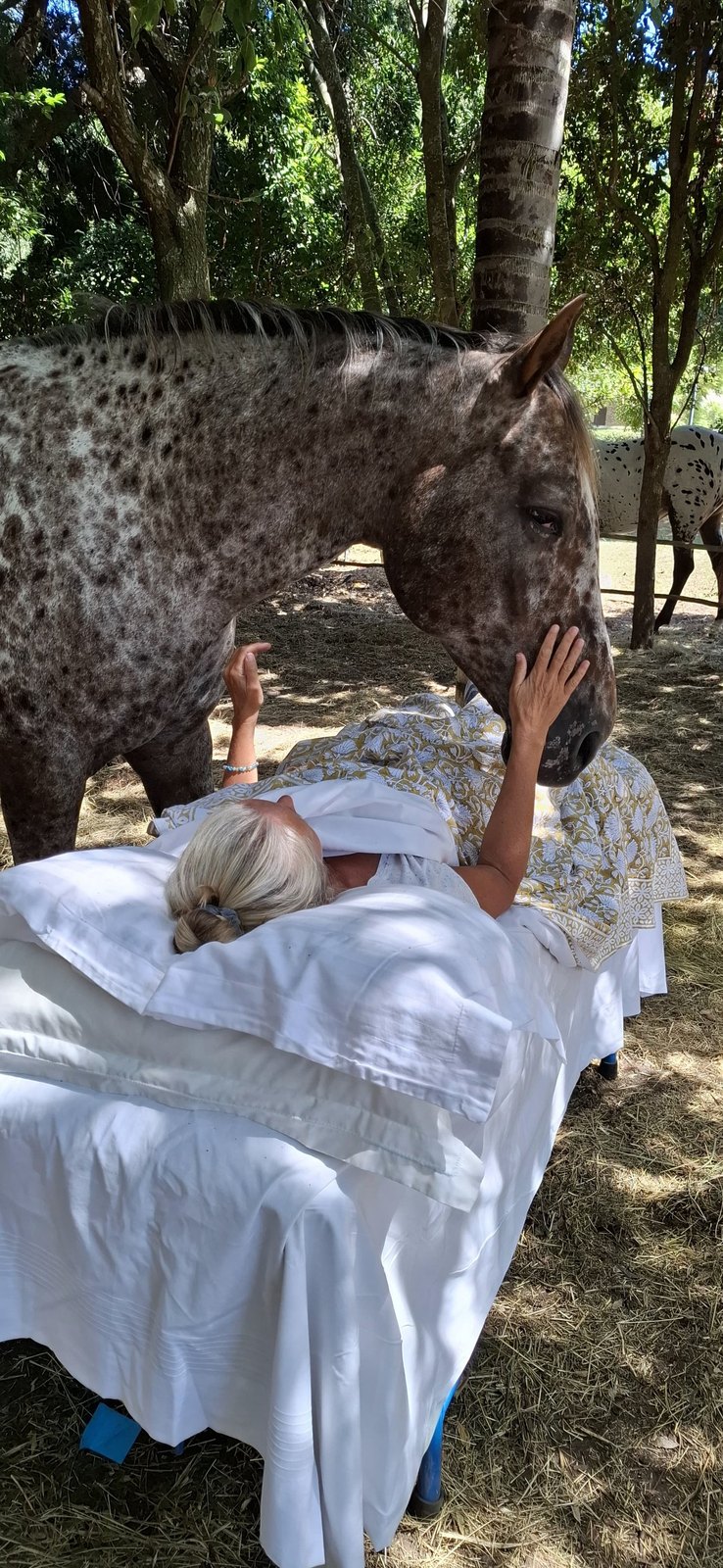
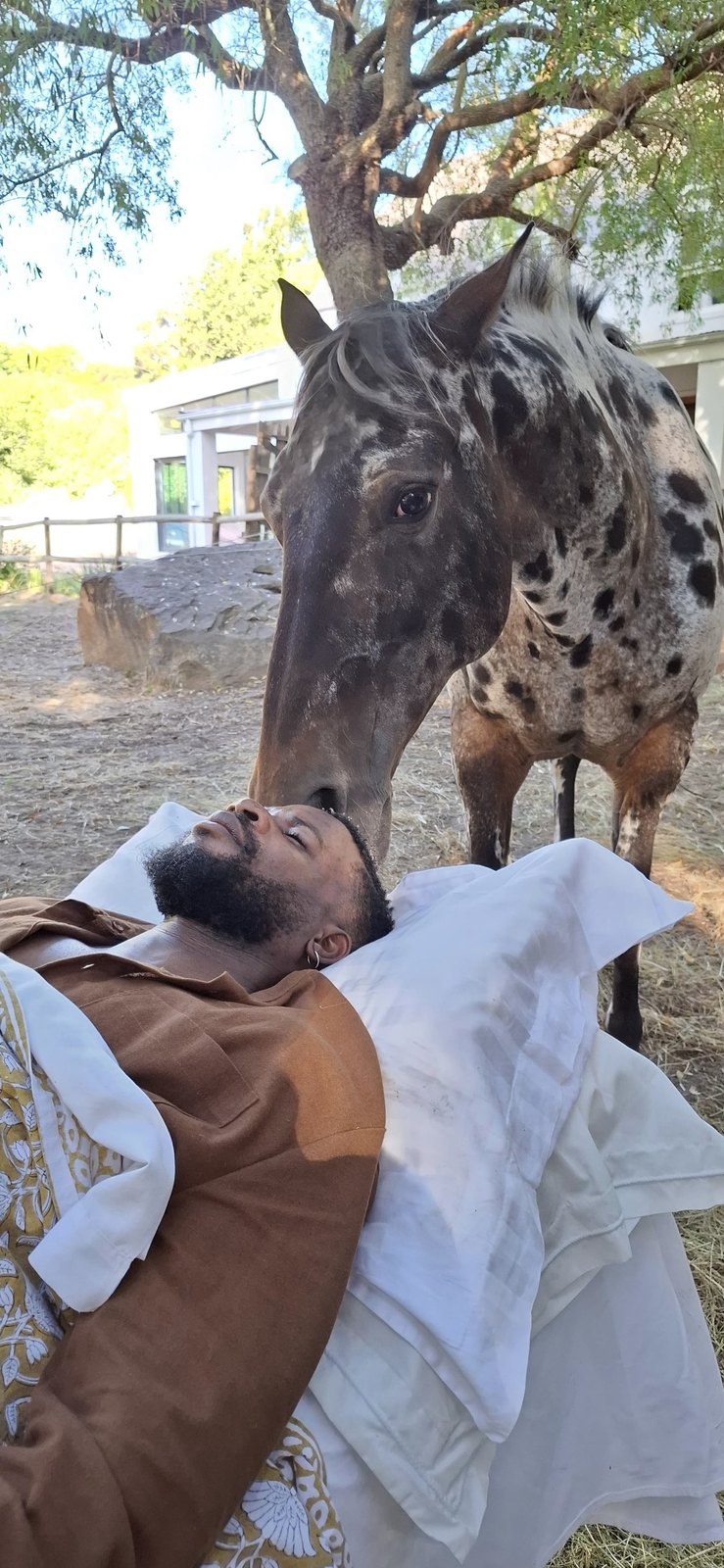
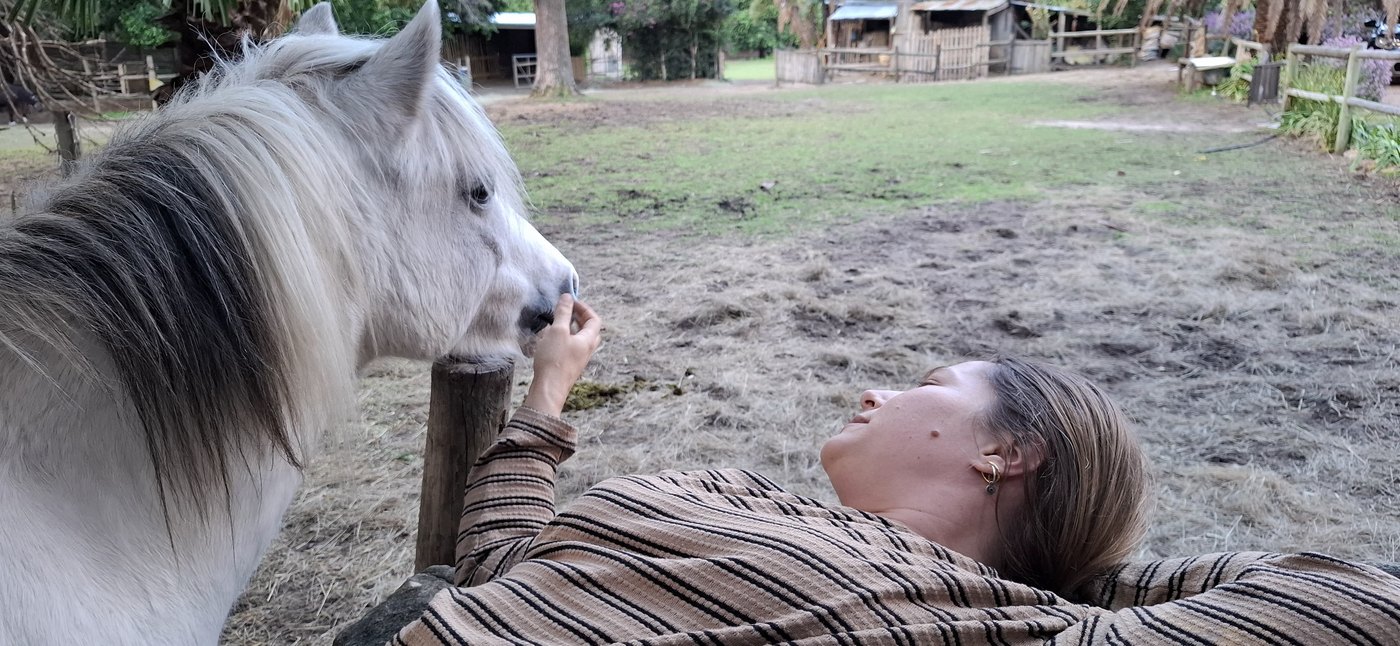
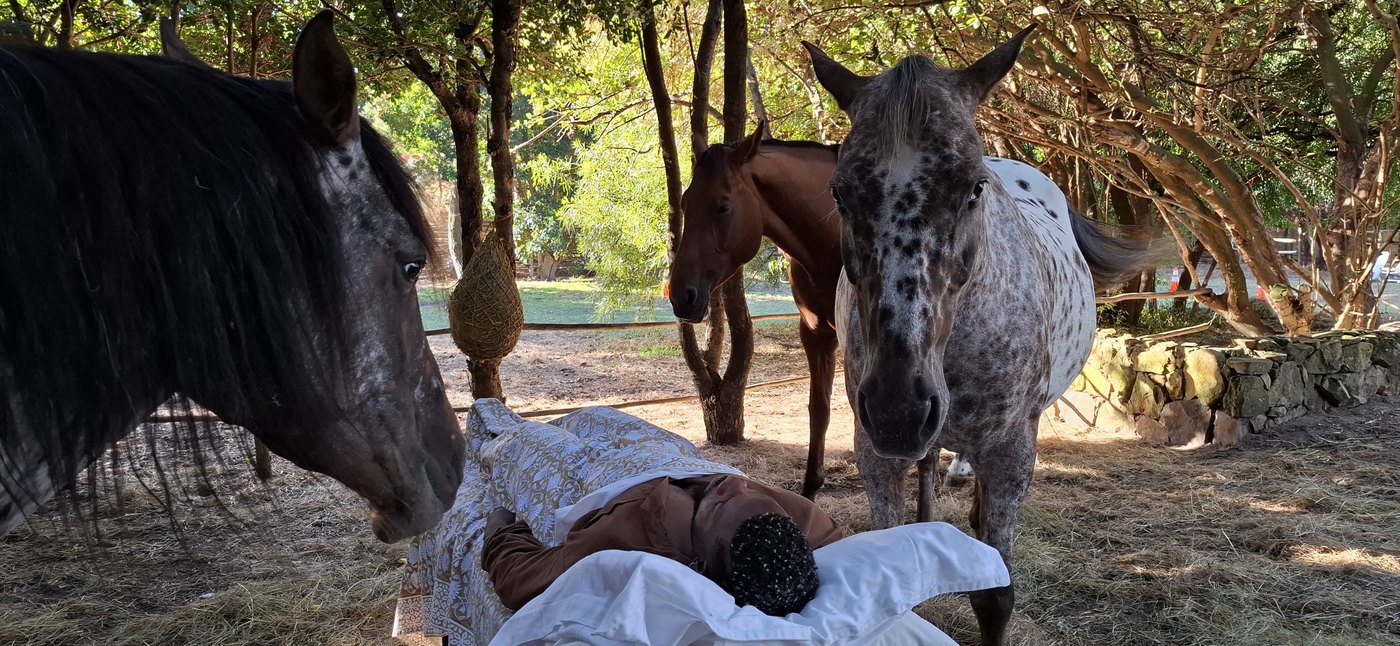
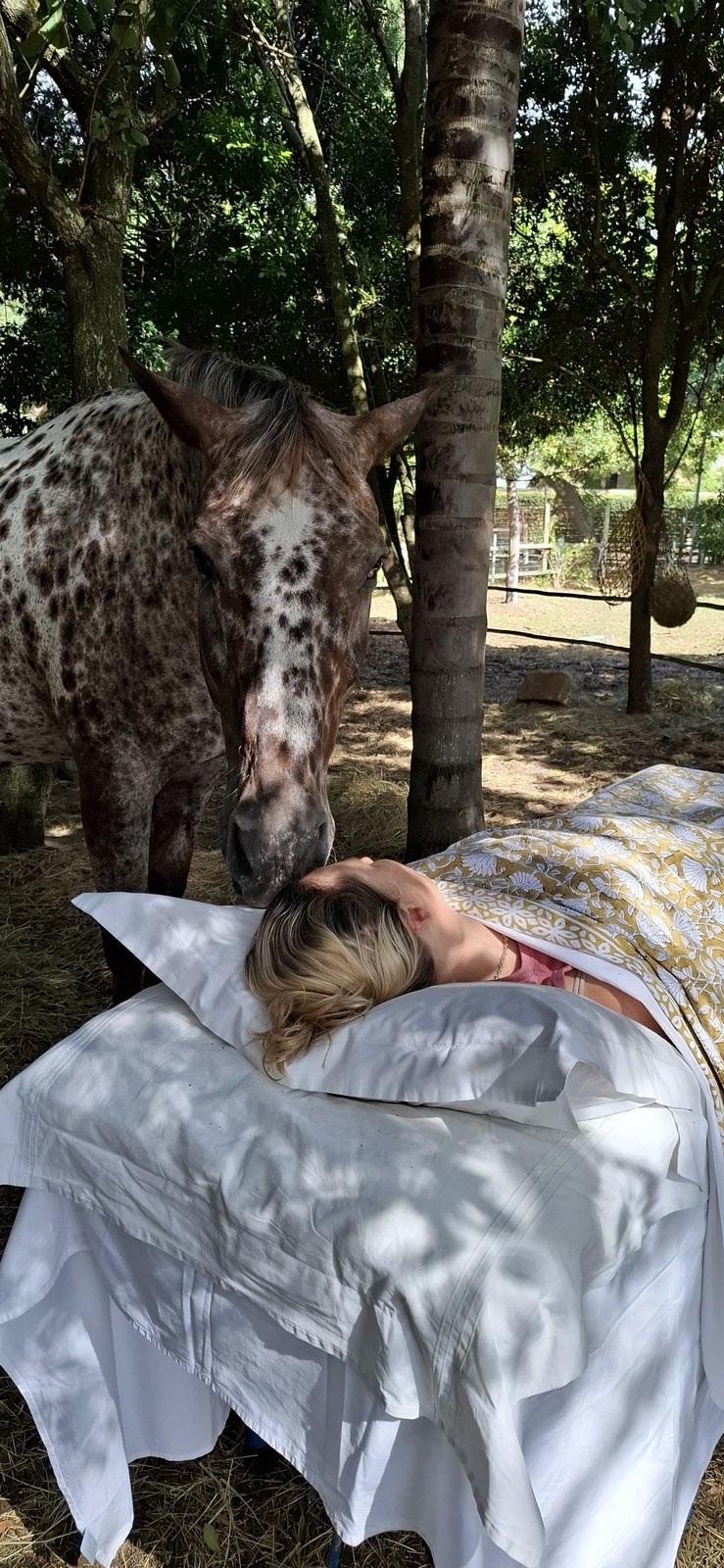
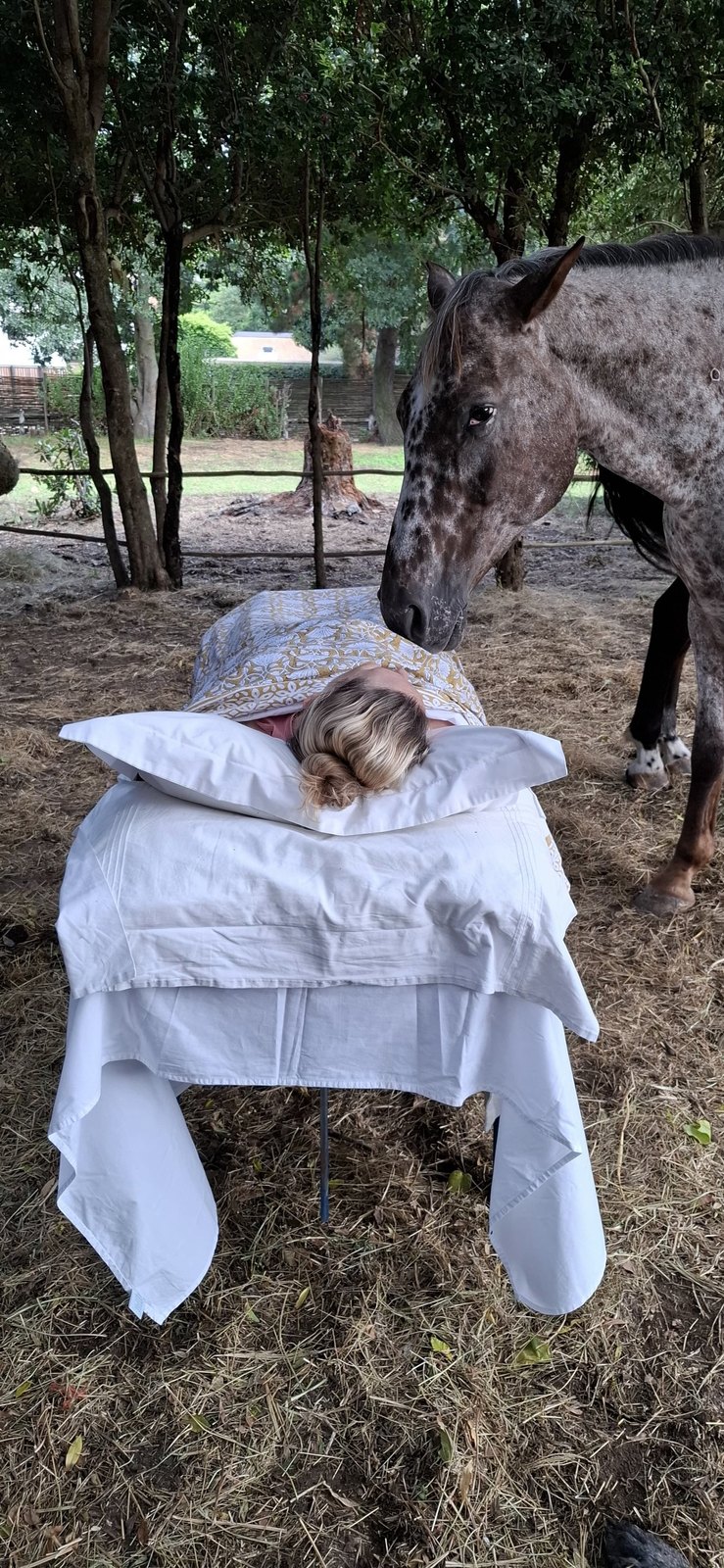
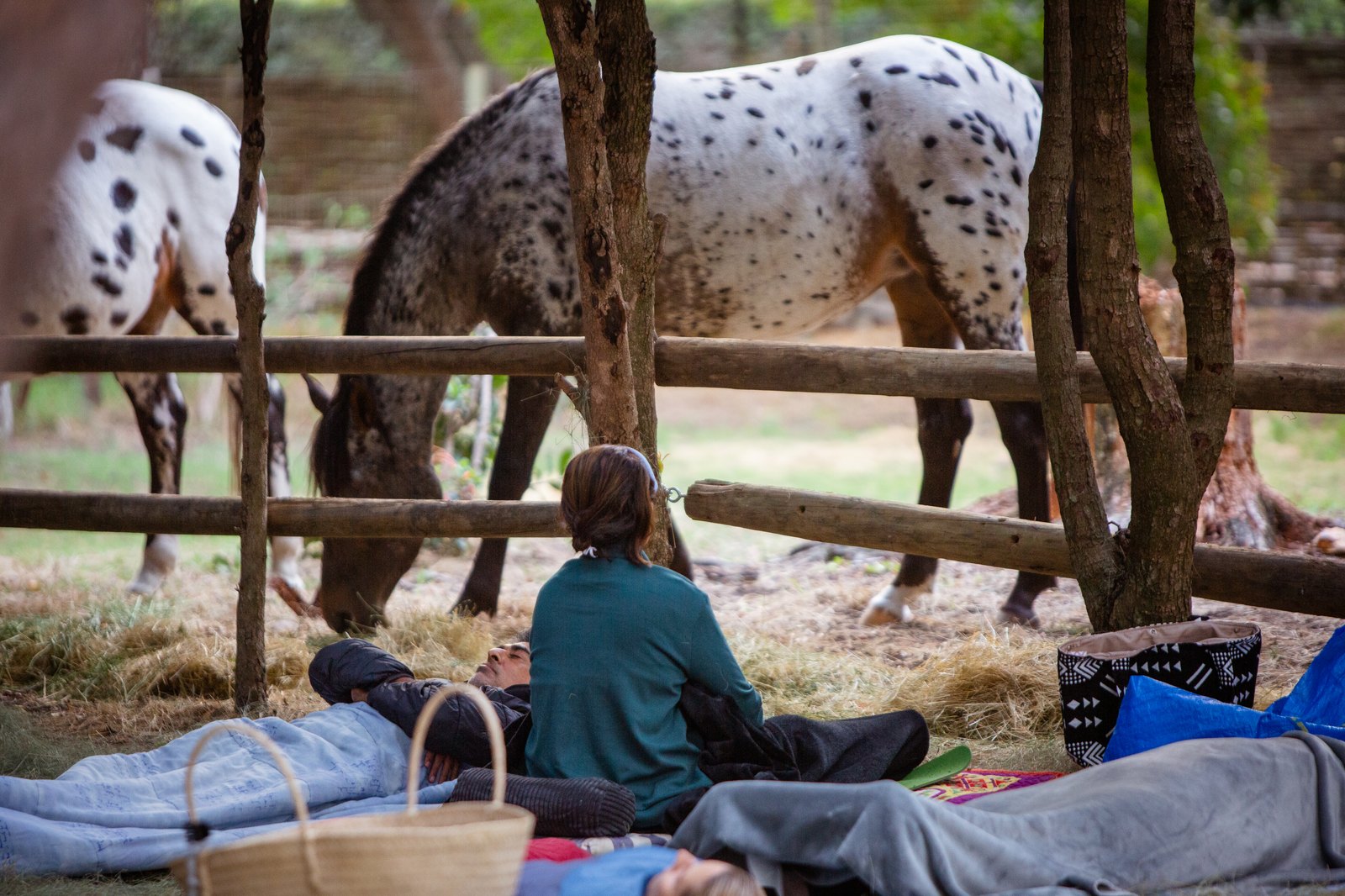
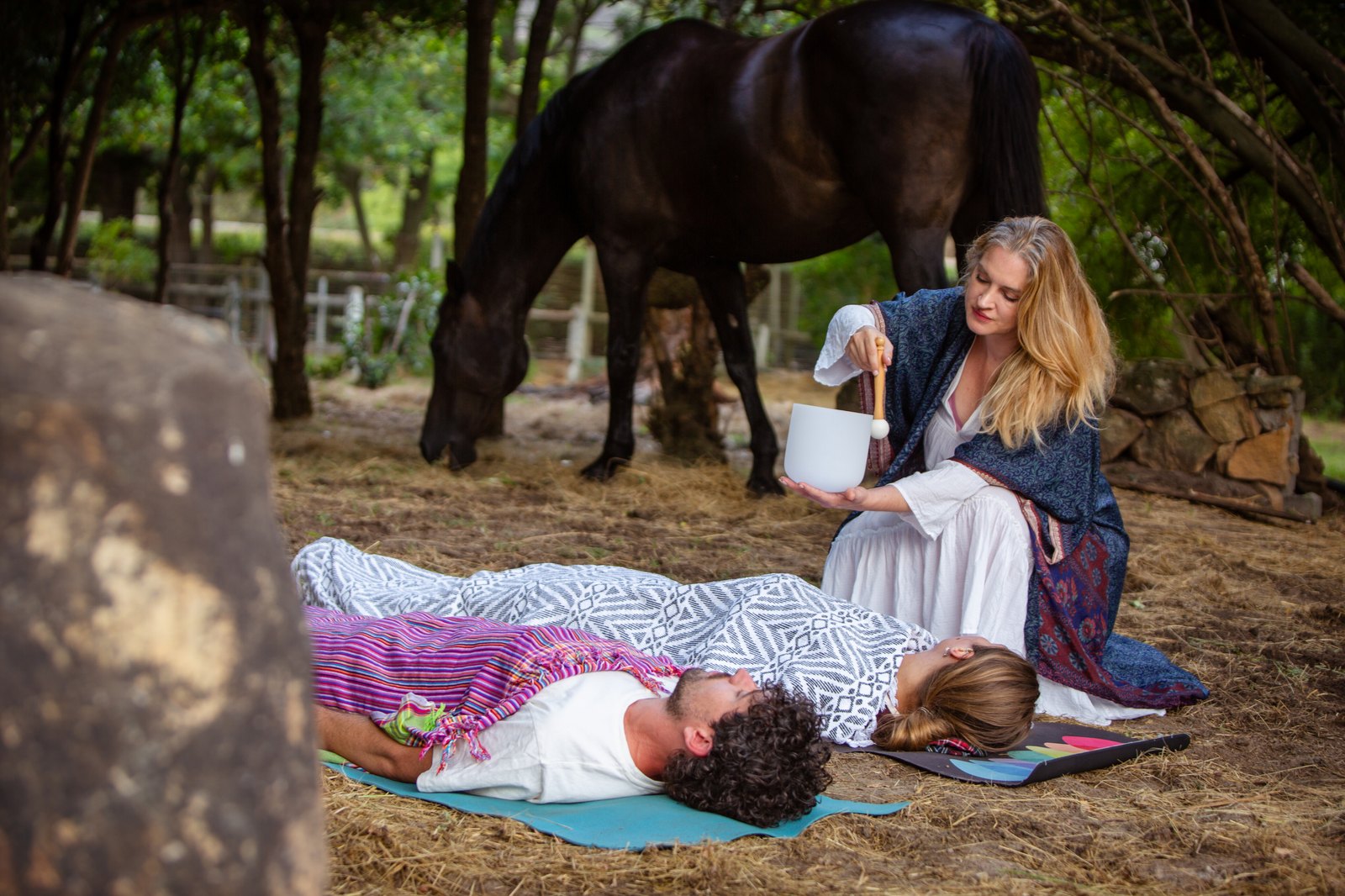
Here is what happens instead. You take your shoes off. You lie down on a bed made up in the shade, under trees that were here long before any of us, with the mountains standing over the whole arrangement. Somebody covers you and asks whether you would like another blanket. And then, for the better part of an hour, six horses go about their afternoon around you while you do nothing at all.
You may be touched. You may be ignored entirely. Neither is the point, and neither is a failure.
Equinection
Forty five minutes to an hour, gate to gate. All of it, in order, so that nothing about the afternoon has to be guessed at.
The house first. A bathroom, a glass of water, and the distinct impression that nobody is in any hurry, which turns out to be the first useful thing that happens to you here.
Germaine will tell you three things before you go down to the field. That the horses may not come to you, and that this is normal. That she will be there the whole time and will not let you be hurt. And that a horse might nip, because that is how horses talk to each other, so you do not need to be frightened of it.
Then she will ask you to relax as much as you can. That part matters more than it sounds.
“That's when the horses can do their work. When the human is more relaxed.”
The walk down takes a minute. Shoes off at the bed, into the basket underneath. She will ask how many blankets you want, and most people ask for more than they expected to.
Then music, chosen for its frequency rather than its tune. It covers the road, too. Not that you will hear the road after the first few minutes. Nobody does.
She talks you down into a yoga nidra. Breathe. Find the place you are holding something, and put the breath there, and let it go. If that sounds like a great deal to ask of an ordinary Tuesday, it is markedly easier lying in a field than it is anywhere else.
Then the roots. She will ask you to send them out of your body and down through the ground, into the trees and the fungus and the whole quiet machinery of the living thing you happen to be lying on top of. And then to notice what comes back up.
You will hear them before you see anything. Grass being torn. The swing of a tail. Then breath, somewhere above your head, closer than you were expecting.
“It feels like they're transferring energy from the ground into the human. Or sometimes it feels like they're taking energy out of the human, and their behaviour shows that. When they start lifting their legs and pulling, it's like they're pulling stuff out of the human. We don't really know exactly what's happening. But we know people feel really good afterwards.”
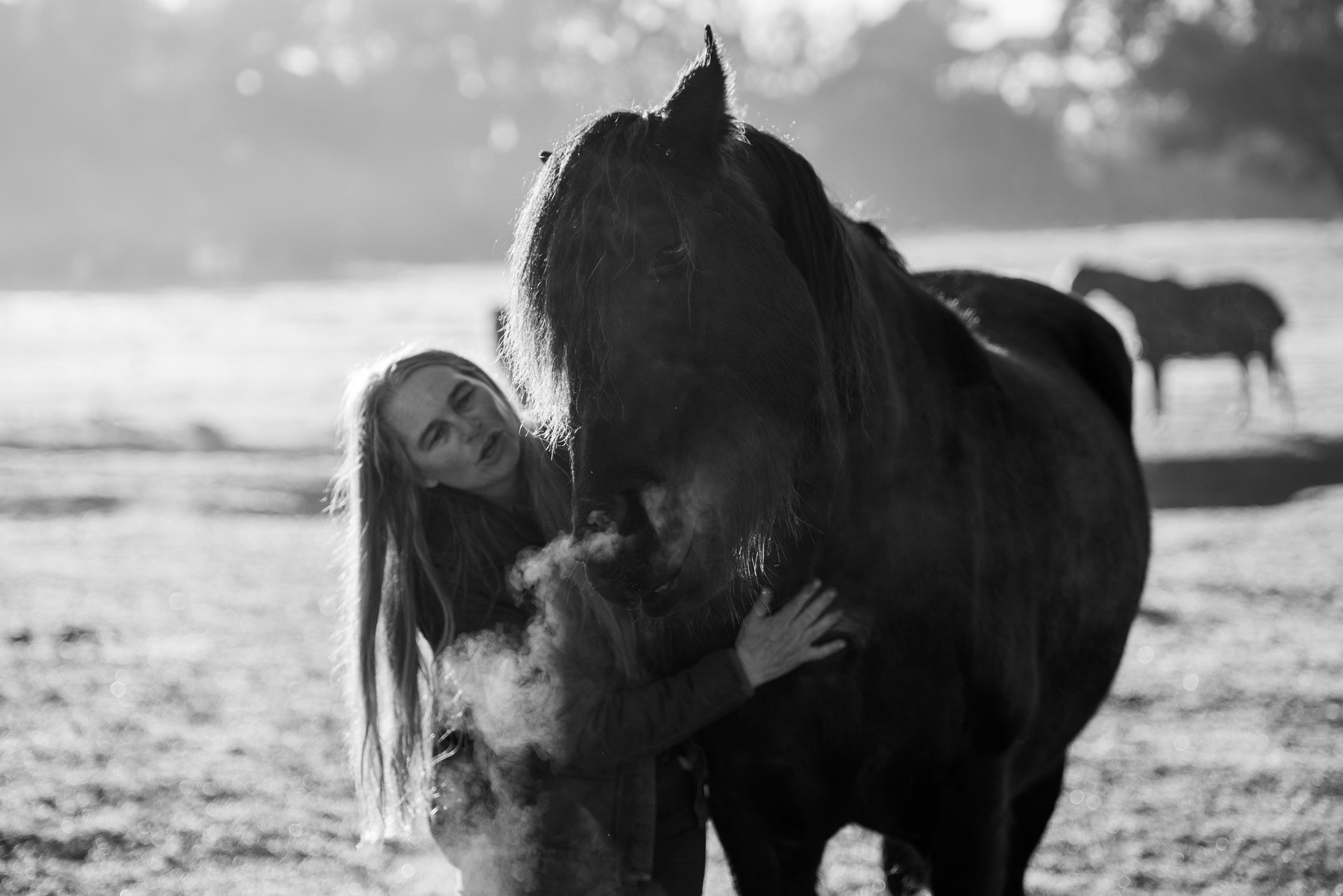
Germaine does almost nothing here. If you cry, her hands go on your shoulders. Otherwise she stays out of it entirely, which is harder than it sounds and most of the skill.
People reach for the same comparison without being prompted: sitting on a beach, looking at the ocean, with nowhere you are supposed to be. Nothing has been fixed. Nothing has been solved. You simply tend to feel well for a good while afterwards, and to find yourself unable to say quite why.
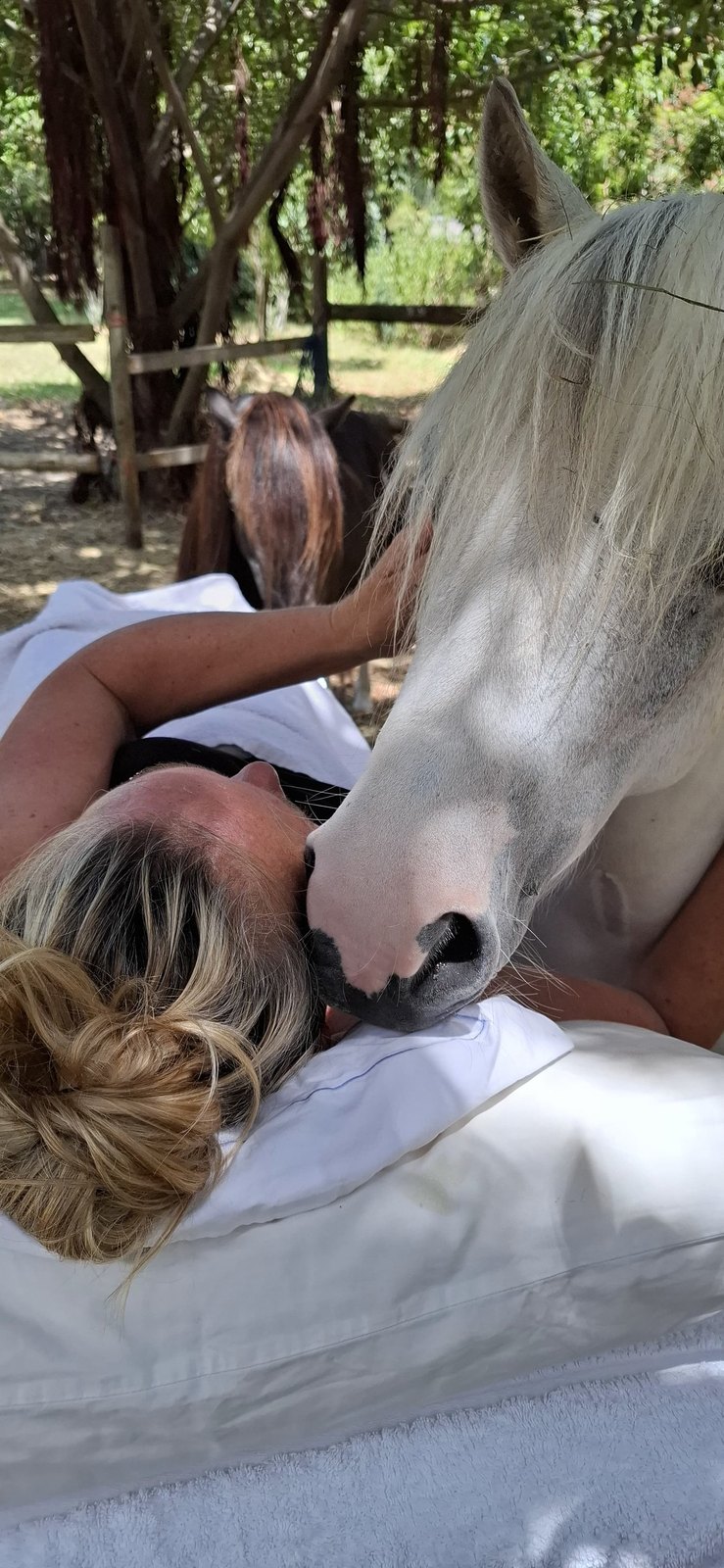
The horses
Germaine has called them that for years. She has never heard another soul say it, and does not appear to find it embarrassing, which tells you most of what you need to know about her.
A horse hears your heartbeat from four metres. It has no choice in the matter. Everything about a prey animal is arranged around knowing what is walking toward it, which means that somewhere between the gate and the water trough, one of them has read you, formed a view, and got on with its day.
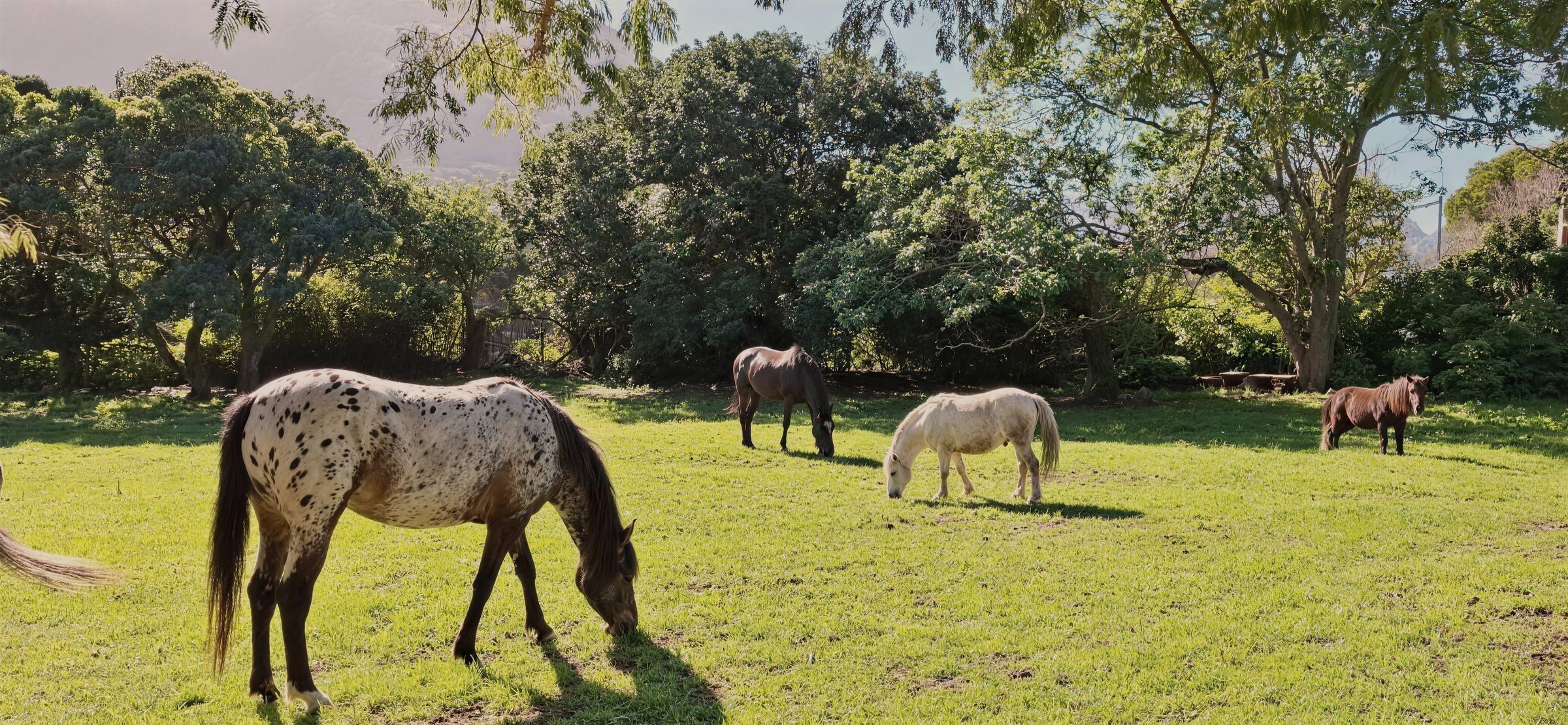
There are six. No two are the same to stand beside. Germaine introduces them herself, in person, which is precisely why you will not find them listed here.
Evenings at the farm
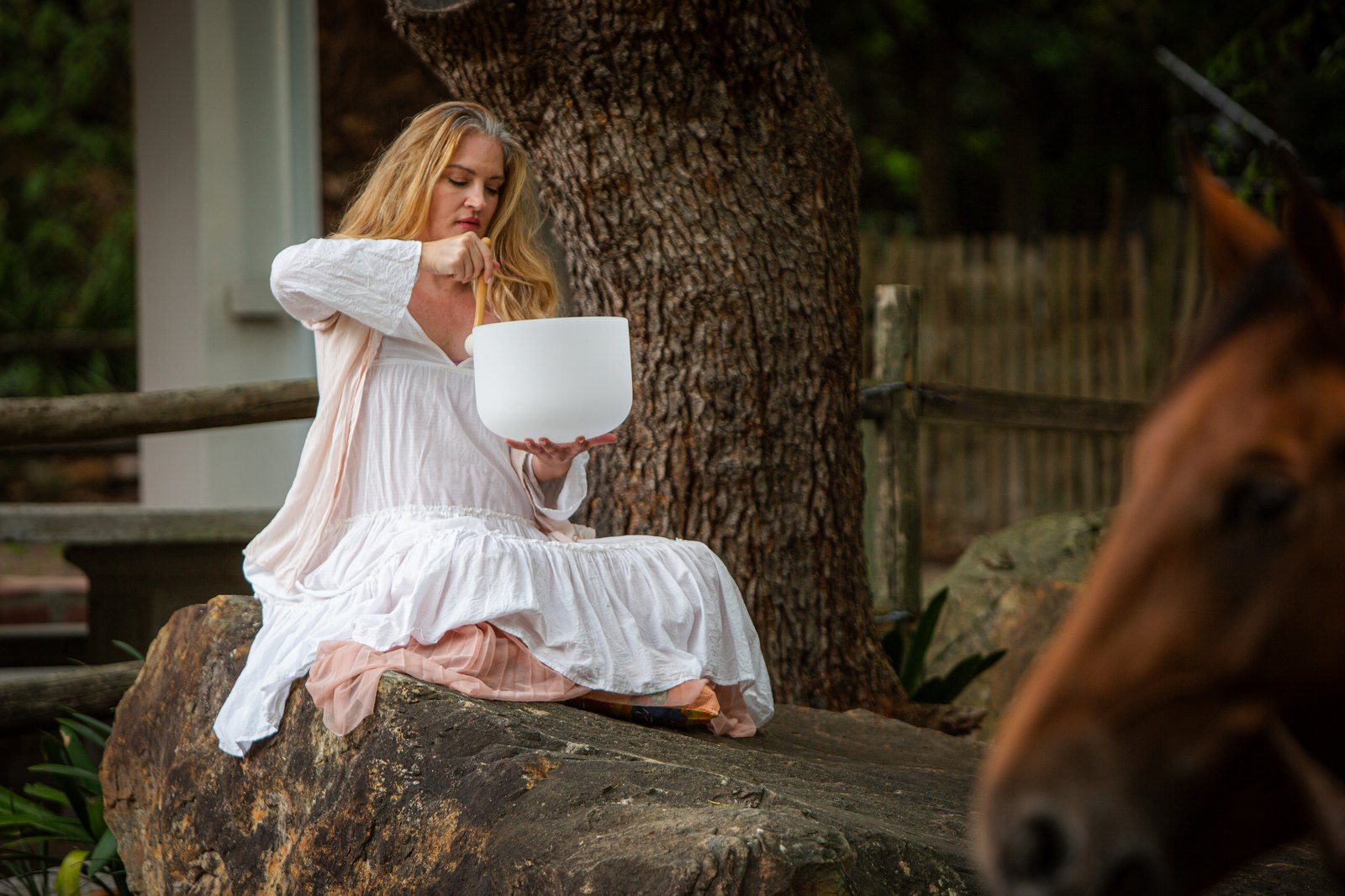
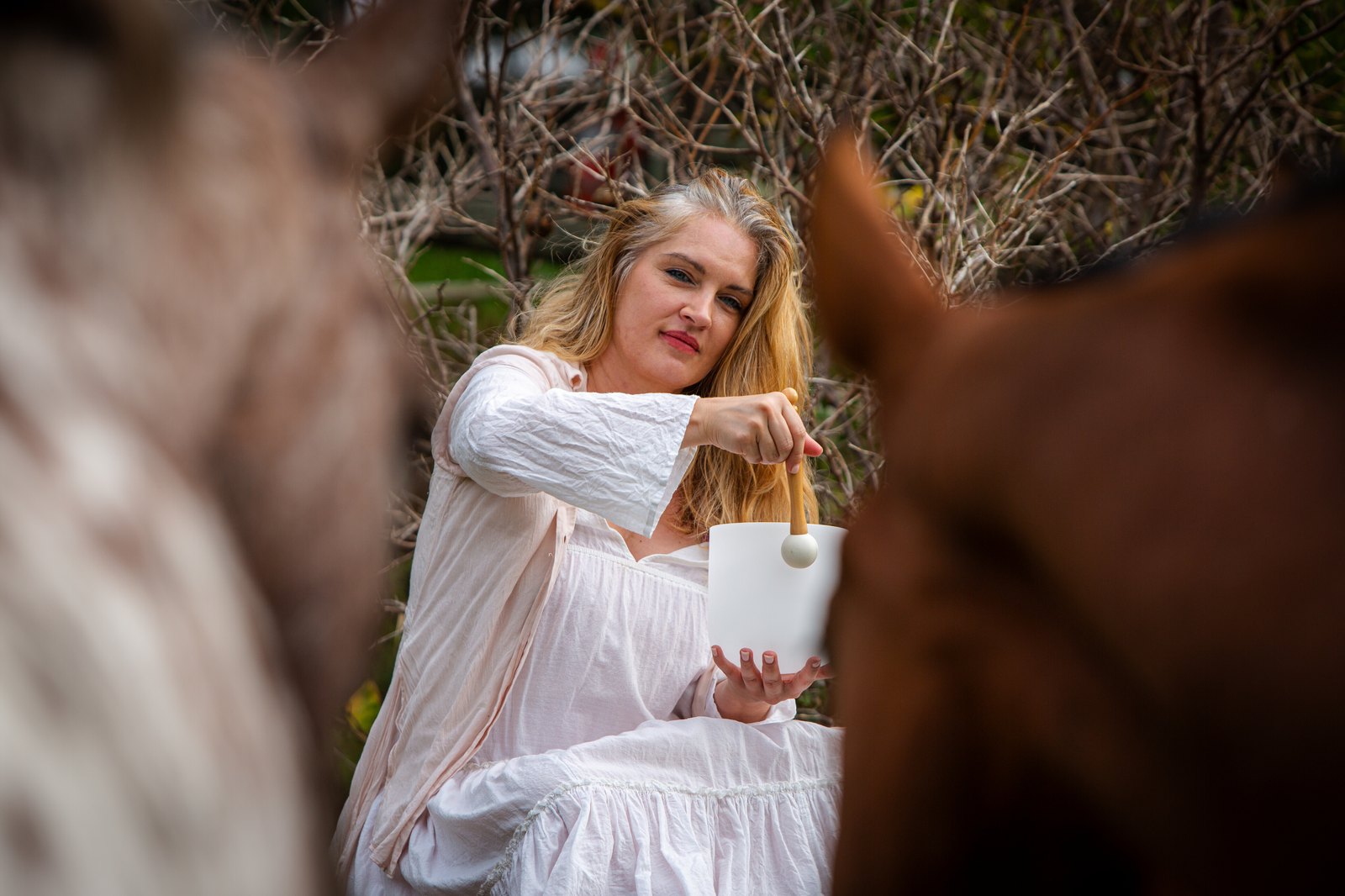
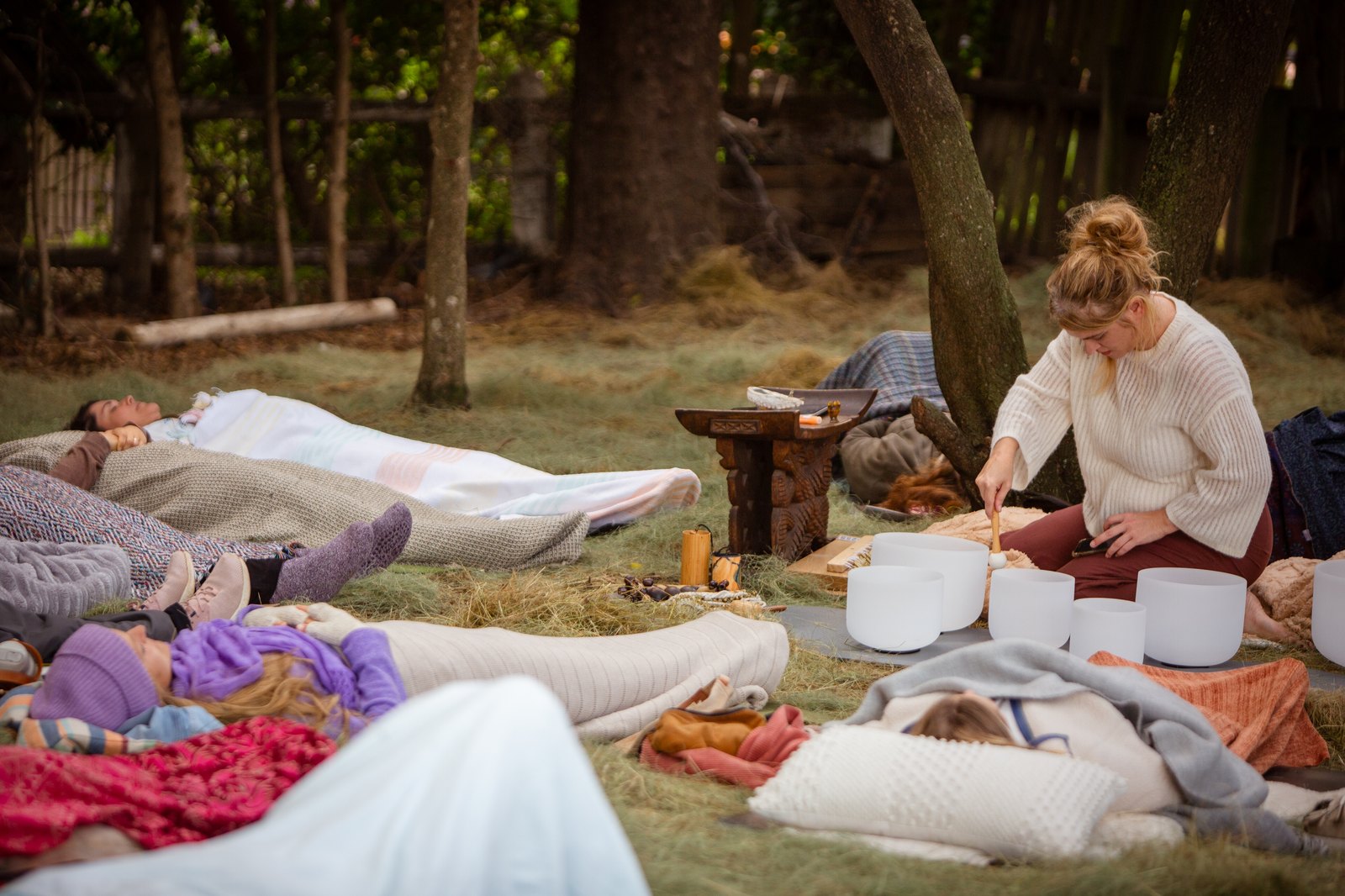
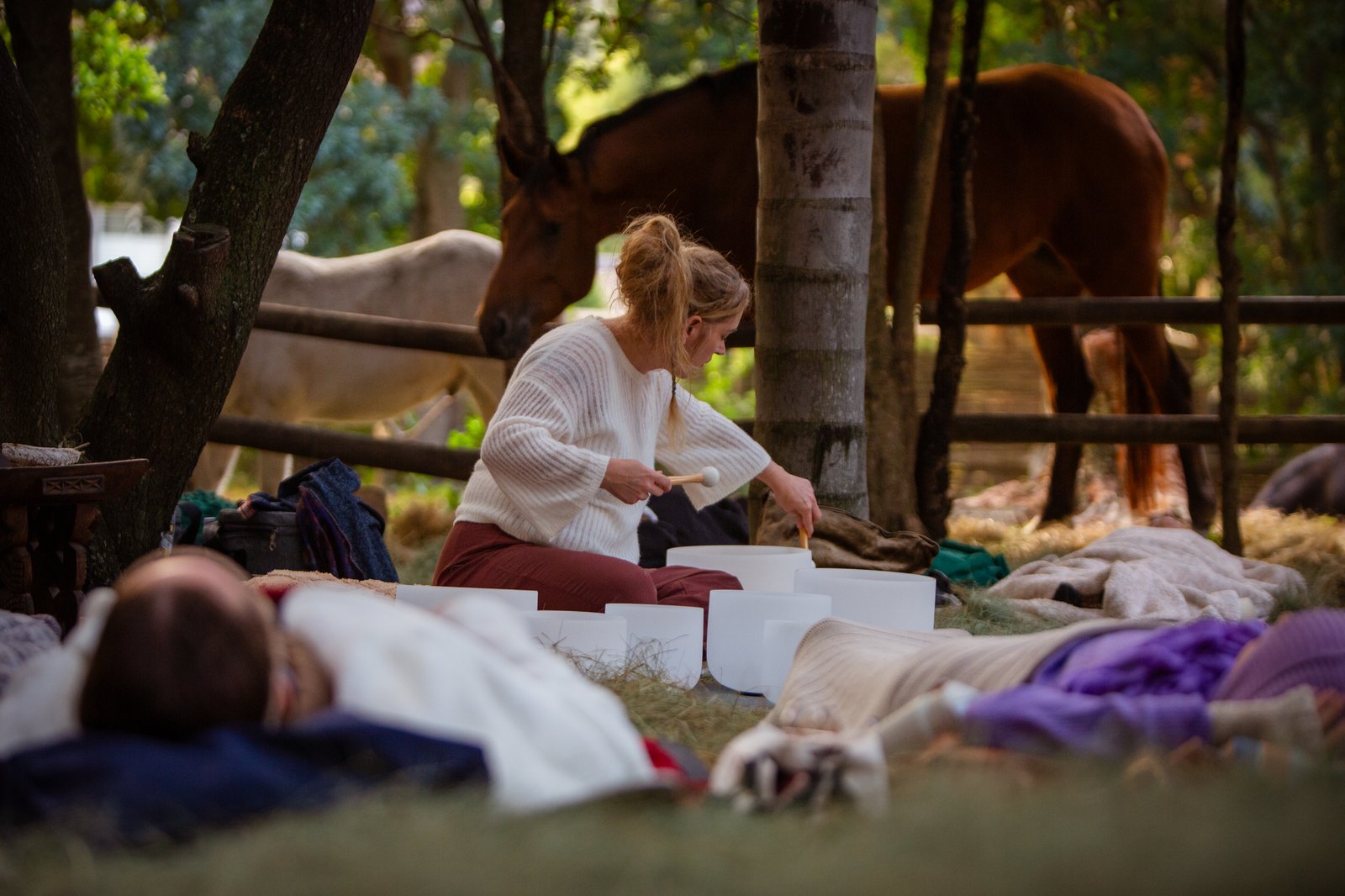
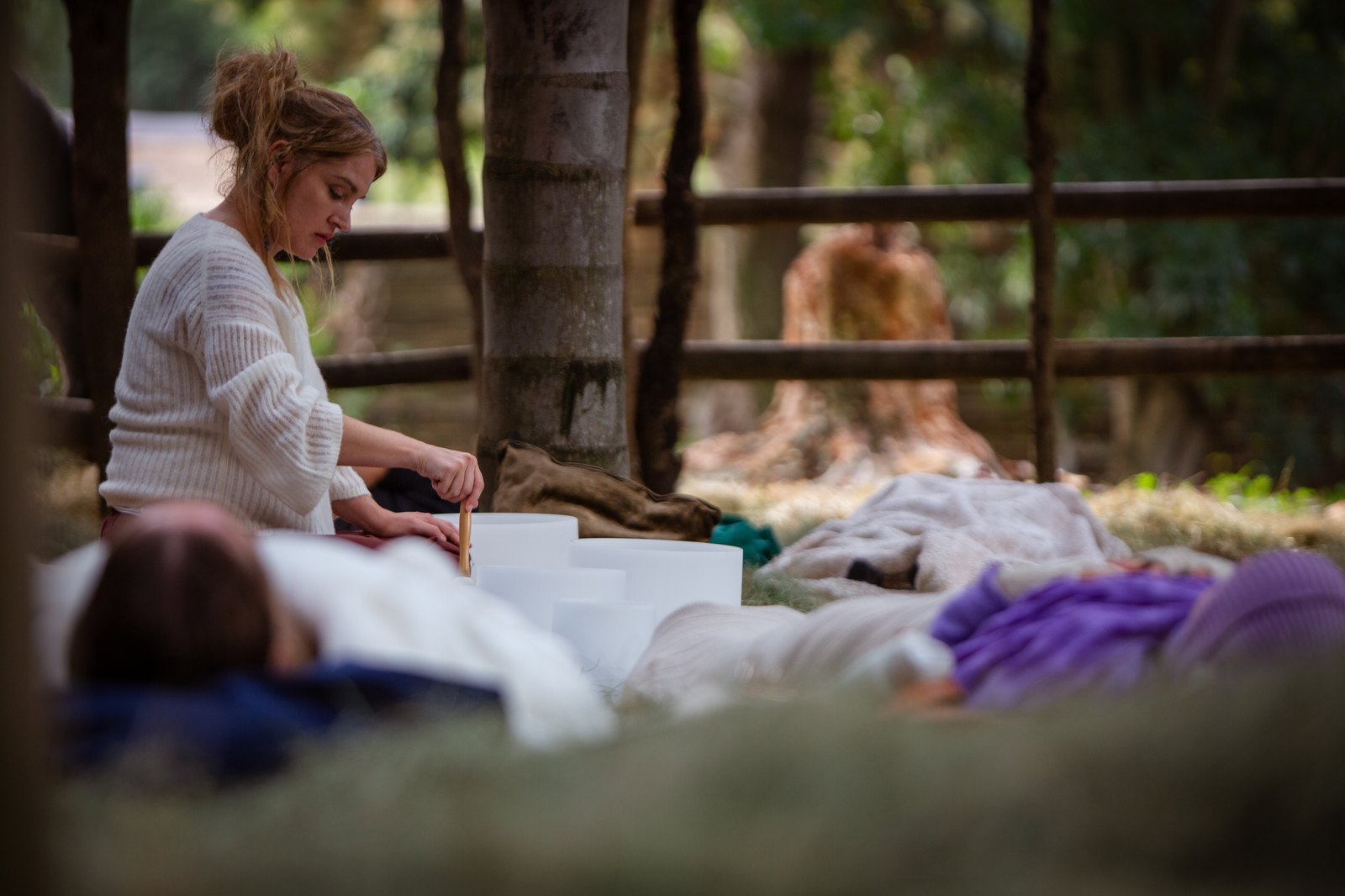
Crystal bowls played live, the mountains going dark behind you, and horses grazing somewhere just past your head.
You lie down. Somebody plays. The light goes. That is genuinely the whole of it.
Nothing is asked of you and no experience is required. Numbers stay small on purpose: fifteen people in a field is still quiet, fifty is an event, and an event is the precise opposite of the point.
Sound Healing runs October to March and is ticketed through Quicket. The dance gatherings are free. Numbers are capped for both, and nothing is confirmed until the weather allows.
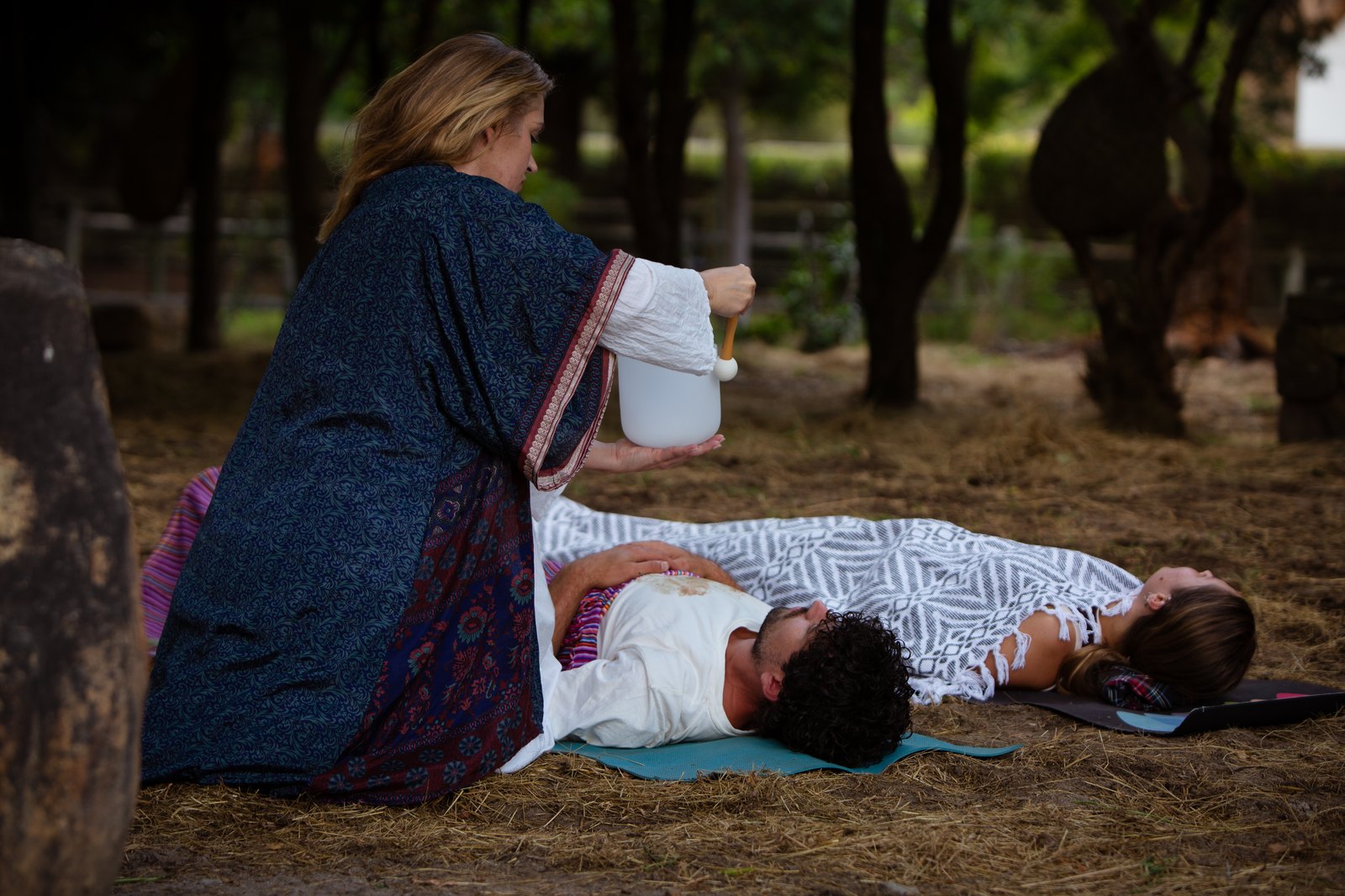
It has to be. This happens outdoors, on the ground, which rules out wind, real heat, and a Cape winter that leaves the field far too wet to lie down on. Germaine would rather run five evenings that are good than twelve she spends apologising for.
Dates for the new season are announced in September.
Arrive from the time on your ticket. The gate closes sharp, because one person walking in late undoes it for everyone else. Street parking is guarded.
See the next evening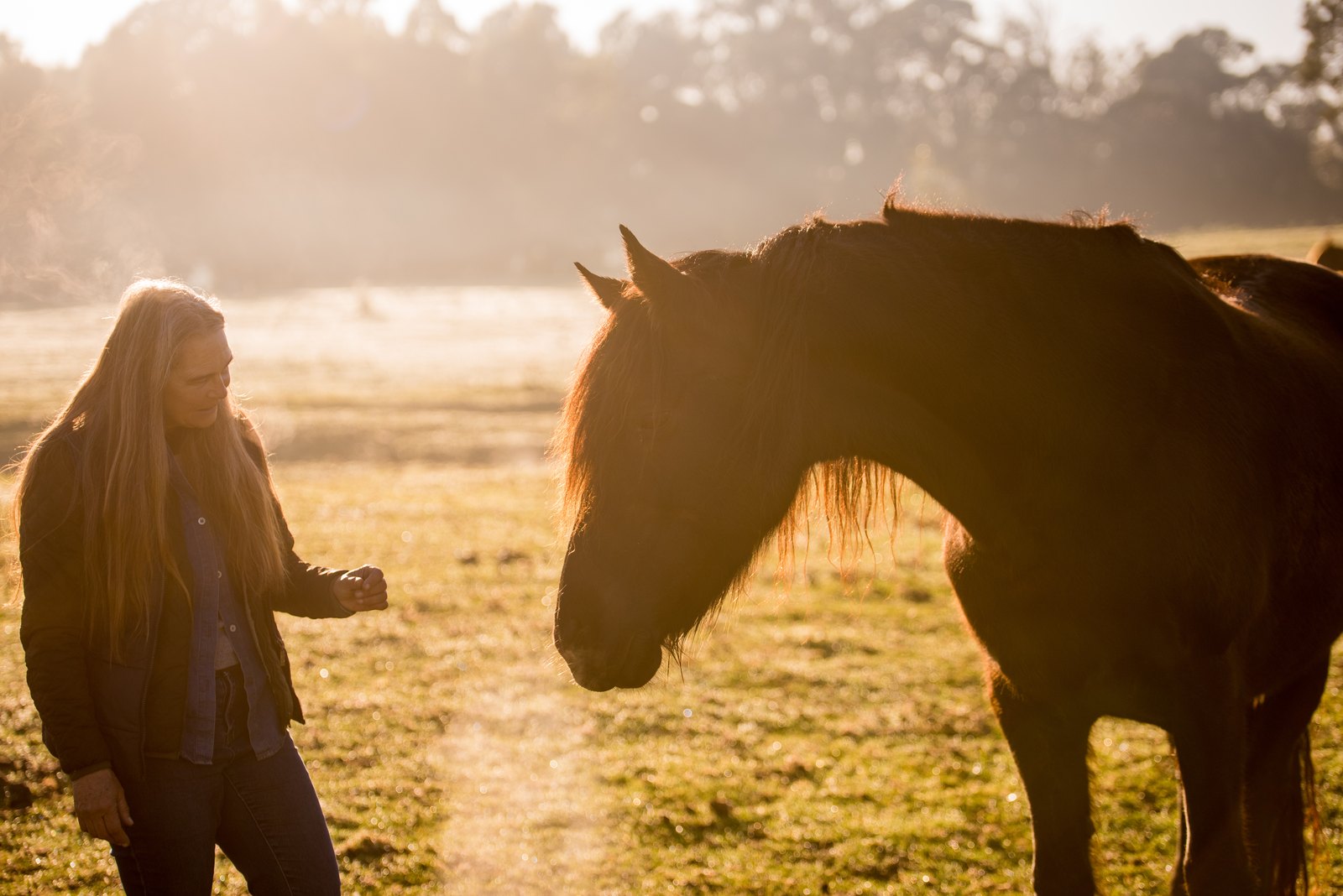
About
He was born on the wagons. Taking the horses down to the river was his job, and one morning a leopard came out of the reeds. They reared, they bolted, and one of them came down on his head. He lived. He kept the shape of it.
When she was small, all she wanted was to be allowed to touch it.
He talked about the horses in the war, and how it was the horses he felt sorriest for. She cannot say precisely where any of this started in her. She suspects it started there, with an old man, a scar, and a child who was allowed to put her hand on it.
By three she was informing her parents that a white pony was needed in the garden. At nine, a friend's mother arranged lessons once a week. At eleven her father answered an advertisement in the parish church and came home with a pony called Sir Dazzle.
She got herself there alone. The red bus, dropped in town, then a long walk to the stables past everything that frightened her, every week, because that was what it cost. She was eleven years old and it was 1972. She has not been without horses since.
She is not a healer, and she will not be called one. She says so herself, plainly, and she is right to. Nobody who comes here is being fixed. What she does is quieter than that and considerably harder: she makes a place where a person can lie down under old trees, in the middle of a herd, and stop performing for an hour. She settles you. She stays. Then she gets out of the way and lets the horses decide. She has watched it happen hundreds of times and still says she does not know exactly what it is.
“If I didn't have horses I wouldn't be half the same as I am. My whole nervous system has been reset by horses.”
She is sixty four, and she is unsparing about the world she came up in. Horses standing in stables twenty four hours a day, which she calls one of the greatest crimes of the century, and which she was part of for years.
“When I think about it now, it's one of the greatest crimes of the century. And I was part of that for years.”
It is why there is no competition here and never will be. No racing, no polo, and no human ego arriving ahead of the welfare of the horse. It is also why she says the part most people in her position quietly leave out: keeping horses in suburbia is expensive, and if she wants to go on living this way, the horses have to cover their own costs. The gate is open for that reason, among others, and she would rather tell you than have you assume something kinder.
She has only lately found language for something she has understood since she was a child. All the childhood things, the not being loved, the parents who could not manage it: the horses filled the gaps while she waited to grow up. Her brothers, she says, still carry theirs.
“I don't have any pain in the way my brothers do. Because I had my horses.”
Which is, in the end, the whole of the offer. She is not promising you anything. She is telling you what happened to her, and leaving the gate open.
A BA in Psychology and Sociology. An education degree in psychology. A qualified yoga teacher. Horses since she was eleven, and still training in groundwork and classical horsemanship, because she does not consider that part finished either.
Before you come
Riverdance Farm, 1 Riverside Terrace, Hout Bay.
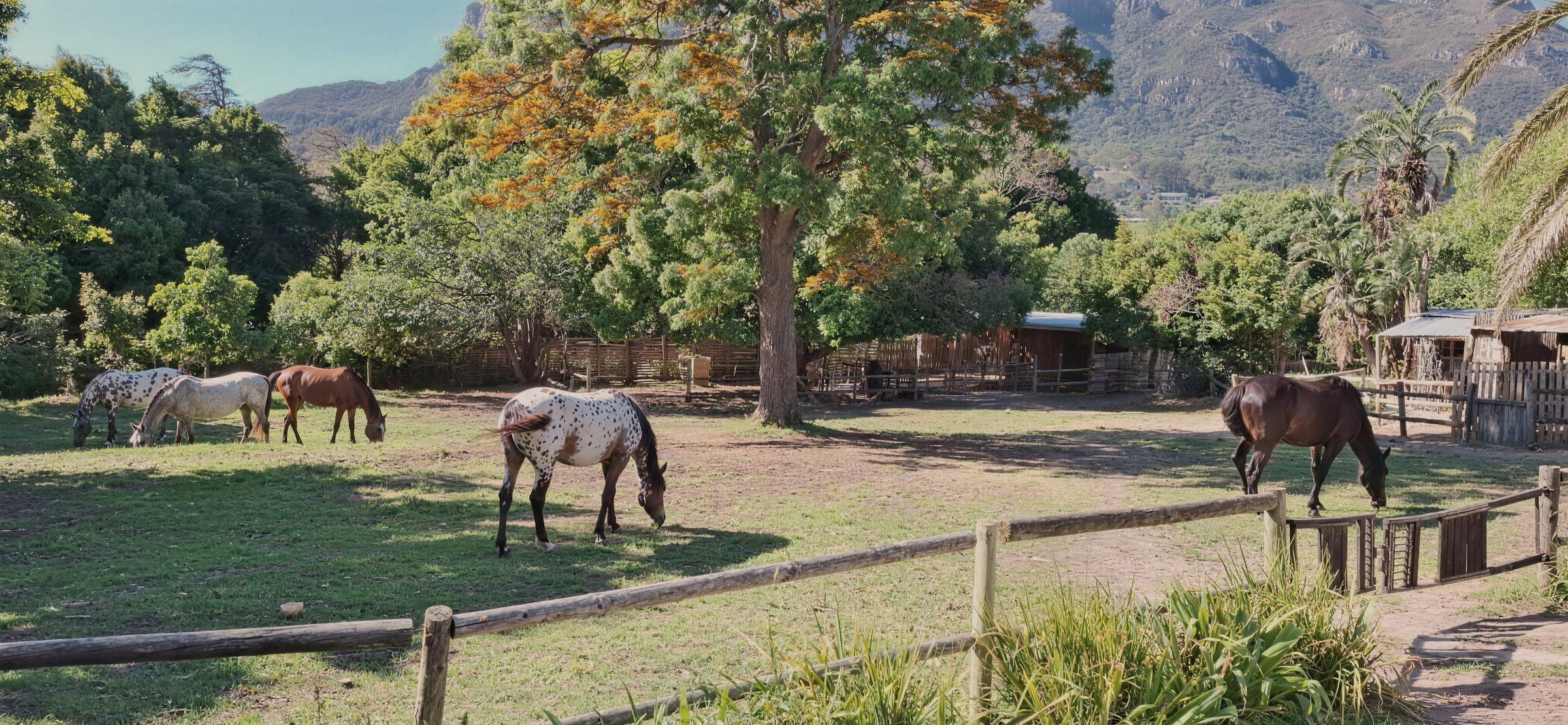
A few cars fit inside the gate and the rest go on the road, where they block nobody. From there it is a minute's walk downhill, past the paddock, and you will most likely be watched the whole way.
Whatever you are comfortable in, and shoes that can take a farm, because it is one. A hat and suncream if the sun is out, which matters rather more for the evenings than for an hour spent lying in the shade.
Nothing.
“Bring yourself in the most comfortable way possible. Come with an open heart.”
Germaine meets you herself. There is tea, and there is always water out with glasses. Nothing begins until you say it does.
There are dogs, and they hold opinions about visitors. They can be shut inside, and often are. Just say.
Questions
Yes, and they will find you. They can be shut in the house before you arrive and it is no trouble at all, so say the word. Worth knowing first: most people end up wanting them out there, and respond to the dogs almost as much as they do to the horses.
Yes, and often. Say what would help before you come and Germaine will work around it.
One might nip. It is how horses talk to one another rather than anything personal, and Germaine is beside you the entire time with no intention of letting you be hurt.
Yes. They may also decline, stand at the far fence, and give you nothing whatsoever for an hour. Germaine will have told you so before you went down, because it is not a wasted afternoon and she would rather you knew that in advance.
Nothing at all, and whatever you are comfortable in. Shoes that can take a farm. A hat and suncream if the sun is out.
No. Not before, not during, and not afterwards unless you feel like it.
No. Germaine is not a therapist, has never claimed to be, and is unusually firm on the point. What happens here is an hour with horses. What you take away from it is yours.
Anyone frightened of horses, or who would simply rather not be near one. It will be a very long hour.
Who comes
Teenagers working through something. Autistic teenagers. Adults of every age, including a good many of Germaine's own generation, sixty and over. And a steady stream of people carrying nothing in particular, who simply liked the sound of an hour in a field with horses.
That last group is as welcome as anybody else, and it bears saying plainly, because a surprising number of people appear to believe they need a reason: nothing has to be wrong with you to come here.
What people say

The farm
The farm takes a small gathering now and then. Germaine's own daughter was married here, which is either a recommendation or a conflict of interest.
Two rules, and neither is up for discussion, out of respect for the neighbours and for the horses: gatherings run from midday and are finished by nine, and there is no loud music. The horses live here. They were here first.
WhatsApp about the farm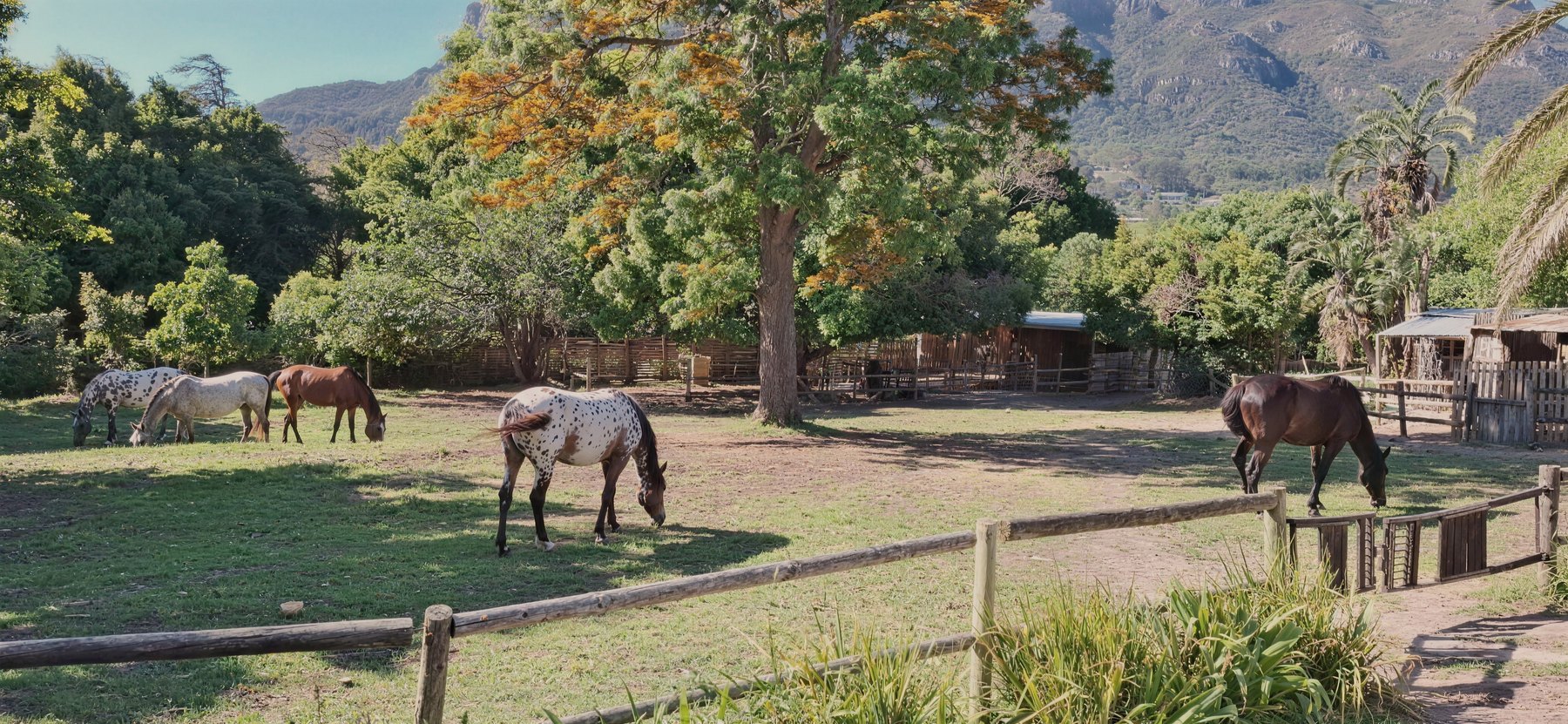
No form. No booking system. No confirmation email from a company that does not exist. You message Germaine, and Germaine answers, because there is nobody else here to do it.
WhatsApp 082 450 3243